
You want to save money and be more environmentally and energy sustainable.
To help you decide if installing an air source heat pump (ASHP) this article illustrates the main features and benefits of Air Source Heat Pumps over older heating technologies to help you decide. Please fell free to contact us if there is anything in particular you want to discuss such as costs, timelines, etc.
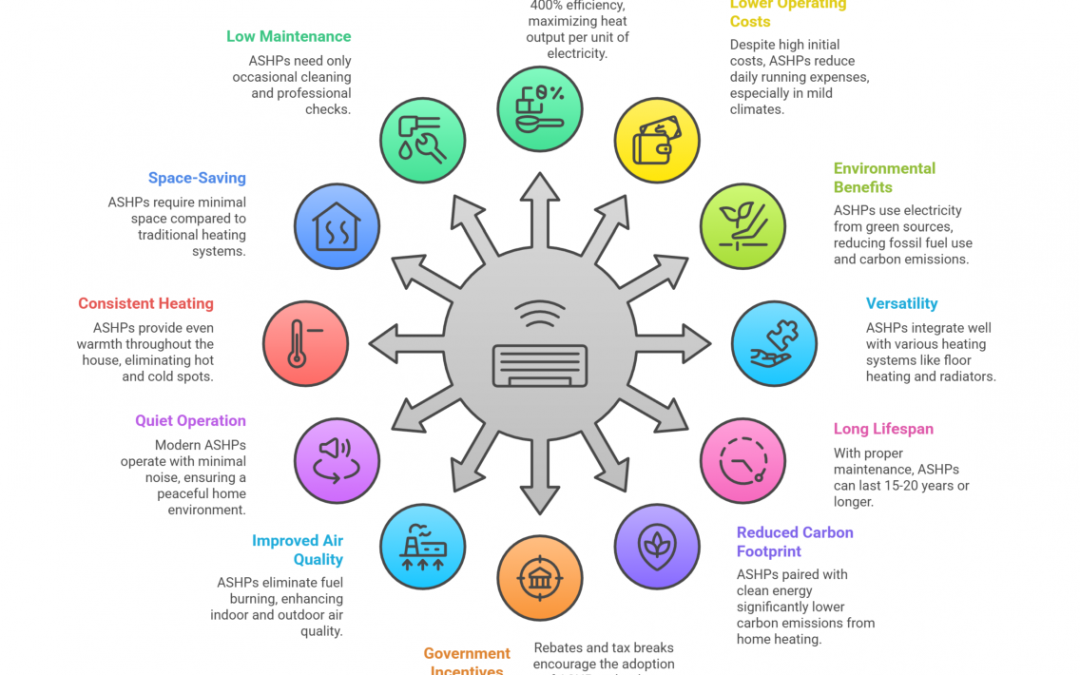
Energy Efficiency
ASHPs move heat instead of making it through fuel burning. This approach boosts their energy savings a lot. They hit 300-400% efficiency rates. For every bit of electricity used, they give back three to four units of heat.
Lower Operating Costs
Upfront setup fees might run high. Yet daily running costs usually beat those of old-school heaters. This shines in mild weather spots where fossil fuel prices soar.
Environmental Benefits
ASHPs run on electricity that often comes from green sources. This cuts down on fossil fuel use. They create zero carbon output right at the site.
Versatility
These systems pair well with options like floor heating or wall radiators.
Long Lifespan
Good upkeep lets ASHPs run for 15-20 years or longer.
Reduced Carbon Footprint
Pairing them with clean power slashes the carbon mark from home heating and cooling.
Government Incentives
Many places hand out cash help for ASHP installs. Think rebates, tax breaks, or grants to push green tech uptake.
Improved Air Quality
ASHPs skip burning fuel for heat. This clears up air inside homes and outside too.
Quiet Operation
New ASHP models work with little noise. They fit right into homes without bugging neighbors.
Consistent and Comfortable Heating
ASHPs deliver even warmth all through the house. No more patchy hot or cold areas like in older setups.
Space-Saving
These units stay small and need little room. Unlike ground-based pumps, they skip big underground pipes.
Low Maintenance
A quick clean now and then plus pro checks keep them going. Overall, they demand little effort.
Our Advice
Assess Your Home’s Suitability
- Insulation is key: Ensure your home is well-insulated (walls, loft, windows) to retain the low-temperature heat efficiently.
- Space requirements: You’ll need outdoor space for the unit with good airflow and minimal noise disruption.
- Radiator compatibility: Larger radiators or underfloor heating may be needed to work effectively with lower flow temperatures.
Understand Costs and Grants
- Installation cost: Typically ranges from £4,000 to £15,000 depending on system size and complexity.
- Grants: The UK government offers up to £7,500 through the BUS grant to offset installation costs
- Running costs: Can be lower than gas or oil, especially if paired with solar panels or off-peak electricity tariffs.
Plan the Installation Process
- Timeline: Installation usually takes 2–5 days.
- Disruption: Expect some internal work (e.g., pipework, radiators), so plan accordingly.
- Commissioning: Ensure the system is properly commissioned and tested before sign-off.
Post-Installation Tips
- Learn the controls: Understand how to use the system efficiently—heat pumps work best with steady, low-level heating.
- Regular servicing: Annual maintenance ensures longevity and optimal performance.
- Monitor performance: Use smart thermostats or apps to track efficiency and adjust settings.
How can we help you?
Please feel free to contact us if you need help with:
- protecting your plumbing and heating system for the winter,
- upgrading your plumbing and heating system
- adopting greener energy solutions